
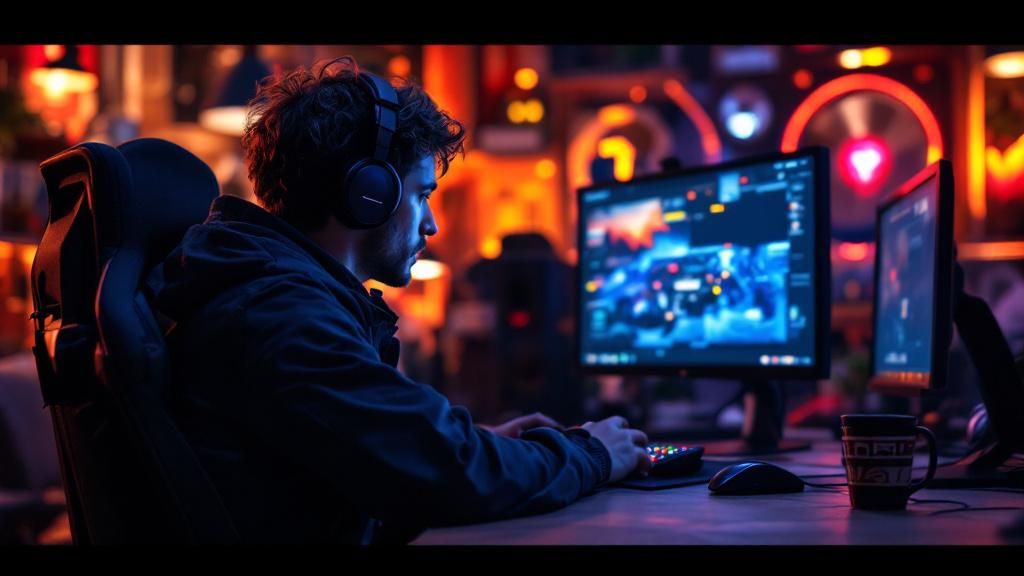
The PC gaming industry has undergone a remarkable transformation in recent times, with independent developers emerging as trailblazers in innovative narratives. Whilst major studios often rely on conventional approaches, indie creators are reinventing storytelling through experimental mechanics, fresh viewpoints, and deeply personal narratives. From story-focused games to experimental genre combinations, these creative minds are proving that compelling stories need not require massive budgets. This article explores how indie developers are transforming the gaming landscape and captivating audiences worldwide with their fresh, audacious approaches to interactive storytelling.
The Emergence of Self-Published Stories
The advent of independent developers has substantially reshaped the narrative landscape of PC gaming. Unconstrained by commercial limitations and market demands, small development teams have taken the chance to experiment with story craftsmanship in ways previously unimaginable. These creators emphasise creative integrity before financial considerations, crafting deeply personal narratives that appeal to consumers pursuing honest storytelling. Their determination to confront traditional gaming formulas has led to remarkable creations that illustrate engaging stories surpasses financial constraints.
What distinguishes indie narratives is their willingness to embrace vulnerability and complexity. Rather than mainstream market-driven content, independent developers weave intricate character studies, philosophical explorations, and culturally specific stories into their games. This approach has built a loyal following hungry for substantive content. Platforms like Steam have enabled wider reach, enabling small teams to connect with worldwide players without intermediaries. Consequently, indie developers now hold considerable sway in influencing modern gaming trends and audience expectations.
Breaking Traditional Game Development Norms
Indie developers have fundamentally challenged the traditional rulebook of game design, rejecting formulaic approaches that govern mainstream production. Rather than following strict genre boundaries, these artistic pioneers craft experiences that blur boundaries between narrative forms. Their readiness to explore with unconventional narrative structures, non-linear progression systems, and unconventional art direction has freed PC gaming from repetitive templates. By placing creative intent first over commercial appeal, indie creators prove that creativity flourishes when developers possess creative autonomy and licence to pursue bold ventures.
The effect of this paradigm shift goes well beyond dedicated communities, influencing how audiences interpret dynamic storytelling. Titles with sparse dialogue, world-based narrative, and player agency in narrative outcomes have received critical praise and commercial success. Independent studios have shown that smaller teams, constrained finances, and innovative approaches can produce profoundly moving gaming experiences. This opening up of game creation has encouraged many creators to question established norms, ultimately enriching the whole PC gaming landscape with diverse, thought-provoking narratives that resonate with present-day audiences wanting genuine creativity.
Impact on the Broader Gambling Sector
The impact of indie developers extends far beyond their own financial performance, fundamentally reshaping how major studios tackle game development. Acknowledging the critical acclaim and player engagement generated by innovative indie titles, established publishers have begun investing in smaller, more experimental projects. This shift represents a fundamental shift in the industry, where creative risk-taking is increasingly valued alongside blockbuster production. As a result, the traditional separation of indie and mainstream gaming has become significantly less clear, fostering a more diverse gaming ecosystem.
Indie creative approaches to storytelling have directly inspired mainstream game design philosophies, with major studios now prioritising story complexity and emotional authenticity. Games like those developed by independent creators have demonstrated that players seek out engaging character-focused narratives over graphical spectacle alone. This recognition has prompted larger publishers to allocate greater resources towards script development, voice talent, and narrative creation. The resulting industry-wide emphasis on story craftsmanship benefits all developers and raises player expectations across all gaming devices and financial ranges.
Looking ahead, the cooperative relationship between indie developers and established studios promises continued evolution in gaming narratives. Rising creators from the indie scene regularly move to larger organisations, bringing fresh perspectives and experimental methodologies. This knowledge sharing ensures that forward-thinking storytelling techniques become industry standards rather than marginal segments. Ultimately, indie developers have sparked a transformation within gaming, cementing narrative experimentation as a foundation of current digital entertainment and securing their legacy as revolutionary creative voices.
